
No products in the cart.
Return To Shop
Rhassoul Clay vs Bentonite Clay: Which Is Better for Skin and Hair?
Rhassoul (ghassoul) clay is a Moroccan clay mined in the Atlas Mountains; it is gentle, silky and cleanses without stripping, so it suits hair washing and normal to dry skin. Bentonite clay is a volcanic-ash clay that swells strongly in water and has a more powerful drawing, tightening effect, so it is mostly used for oily skin masks. For a softer, everyday clay, choose rhassoul; for a deep, occasional mask on oily skin, bentonite.
Key facts
- Rhassoul origin: Atlas Mountains, Morocco; used for centuries in the hammam.
- Bentonite origin: weathered volcanic ash; mined in several countries, including the US.
- Feel: rhassoul is silky and rinses easily; bentonite is sticky and dries firmly.
- Strength: rhassoul is milder; bentonite is more absorbent.
- Mix with: water, rose water or orange blossom water; avoid metal bowls for bentonite.
For the face
- Rhassoul: a gentle cleansing mask for normal, combination or dry skin; leave 5 to 10 minutes.
- Bentonite: a stronger mask for oily skin; leave 5 to 10 minutes and do not let it crack too long.
Patch-test either clay first, and moisturise afterwards.
For hair
Rhassoul is the traditional Moroccan choice for washing hair and scalp, because it cleans while leaving hair soft. Bentonite is used in some hair masks but can feel drying. See rhassoul clay hair wash vs shampoo.
For the body and hammam
In the Moroccan hammam, rhassoul is applied after black soap and the kessa scrub, then rinsed. Our rhassoul and henna range ships across the US.
Frequently asked questions
Is rhassoul clay the same as bentonite?
No. Both are clays, but rhassoul comes from Morocco and is milder; bentonite comes from volcanic ash and is more absorbent.
Which clay is better for sensitive skin?
Rhassoul is generally gentler. Patch-test before use.
Can I mix rhassoul and bentonite?
Yes, some people blend them to balance gentleness and strength.
Where can I buy rhassoul clay in the US?
Artossi sells Moroccan rhassoul clay and ships from Miami across the US. Browse henna and rhassoul.

Related posts

Moroccanoil is a hair-care brand; pure argan oil is a single natural ingredient. How a branded argan-infused treatment differs from 100% argan oil, and when... Continue reading
Pure Moroccan argan oil softens hair, tames frizz and adds shine. How to use it as a pre-wash treatment, a leave-in for ends and a... Continue reading

Rhassoul clay can replace shampoo once or twice a week: it cleans the scalp without foaming or sulfates. How to mix it, how to apply... Continue reading
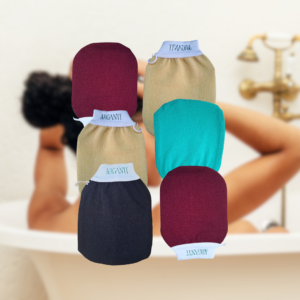
Traditional Moroccan kessa gloves are woven from coarse fibers such as viscose, rayon or natural silk-like textures. What each material feels like and how to... Continue reading

Moroccan black soap is an olive-oil paste used with a kessa glove; African black soap is a solid bar made from plant ash and shea... Continue reading