
No products in the cart.
Return To Shop
Moroccan Black Soap vs African Black Soap: What Is the Difference?
Moroccan black soap (savon beldi) is a soft paste made from olive oil and potash, used in the hammam before exfoliating with a kessa glove. African black soap (such as Ghanaian alata samina) is a solid, crumbly bar made from the ash of plantain skins or cocoa pods with oils like shea butter and palm kernel oil, and is used as an everyday cleanser. They share a name and a dark color, but differ in ingredients, texture and use.
Key facts
- Moroccan: North Africa; olive oil + potash; soft paste; hammam ritual with kessa.
- African (West African): Ghana, Nigeria and neighbours; plant ash + shea and other oils; solid bar; daily washing.
- Color: Moroccan is glossy dark brown to green-black; African is matte brown, often speckled.
Side by side
- Texture: Moroccan is jelly-like; African is a firm, slightly crumbly bar.
- How it is used: Moroccan is left on wet skin for a few minutes, then scrubbed off with a kessa glove; African is lathered and rinsed like ordinary soap.
- Feel: Moroccan softens skin for exfoliation; African is a deep everyday cleanser that some find drying.
- Best for: Moroccan for a weekly at-home hammam; African for daily face or body washing.
Which should you choose?
If you want the Moroccan hammam experience, choose Moroccan black soap with a kessa glove. If you want a solid bar for daily use, African black soap fits better. Patch-test either if you have sensitive skin.
Frequently asked questions
Is Moroccan black soap the same as African black soap?
No. They have different ingredients, textures and traditions.
Which black soap is used in the Moroccan hammam?
Moroccan black soap, the olive-oil paste called savon beldi.
Can I use a kessa glove with African black soap?
You can, but the kessa ritual is designed around the soft Moroccan paste, which softens the skin first.
Where can I buy Moroccan black soap in the US?
Artossi sells Moroccan black soap in several scents and ships across the US. See Moroccan black soap ingredients and browse body care.

Related posts

Moroccanoil is a hair-care brand; pure argan oil is a single natural ingredient. How a branded argan-infused treatment differs from 100% argan oil, and when... Continue reading
Pure Moroccan argan oil softens hair, tames frizz and adds shine. How to use it as a pre-wash treatment, a leave-in for ends and a... Continue reading

Rhassoul clay can replace shampoo once or twice a week: it cleans the scalp without foaming or sulfates. How to mix it, how to apply... Continue reading
Rhassoul (ghassoul) clay from Morocco is gentle and silky; bentonite is stronger and more drawing. How they differ for face masks, hair washing and sensitive... Continue reading
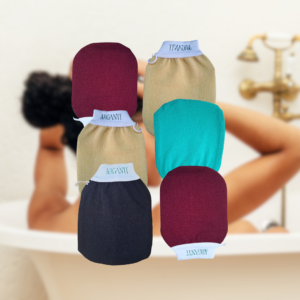
Traditional Moroccan kessa gloves are woven from coarse fibers such as viscose, rayon or natural silk-like textures. What each material feels like and how to... Continue reading