
No products in the cart.
Return To Shop
Moroccan Henna vs Indian Henna: What’s the Difference for Hair?
Moroccan henna and Indian henna come from the same plant, Lawsonia inermis. What differs is where the plant is grown, how finely the leaves are milled, and what, if anything, is mixed in. For hair, the most important thing is not the country on the label but whether the powder is pure henna. Here is what to know before you buy.
Same plant, different origins
Henna grows in hot, dry climates across North Africa, the Middle East and South Asia. India, especially Rajasthan, is the largest producer and exporter. Morocco has its own long tradition of growing and using henna for hair, hands and celebrations such as weddings.
Because henna is a crop, its strength and tone vary with the region, soil, harvest and storage. Two batches from the same country can differ, so origin is a guide rather than a guarantee.
How they tend to differ
- Milling: powders sold for body art are sifted very finely so they flow through a cone. Hair henna does not need to be as fine, though a smooth powder mixes and rinses more easily.
- Additives: some products sold as henna, from any country, are blends with other plants such as indigo or cassia to change the shade. Moroccan hair henna is usually sold as plain henna.
- Color: pure henna, wherever it is grown, gives red, orange and copper tones. Brown or black results come from added plants, not from henna itself.
What matters most: is it pure?
Whichever you choose, check the label:
- The ingredient list should say Lawsonia inermis (henna) and nothing else, unless you deliberately want a blend.
- Avoid products sold as black henna. These can contain synthetic dyes and are not pure henna.
- Fresh henna has a green, earthy smell. Old or poorly stored powder can give a weaker color.
- Always do a patch test 48 hours before use and a strand test to see the shade.
Which should you choose for hair?
- You want a natural red, auburn or copper tone: plain henna from either origin.
- You want brown or black: you need henna mixed with indigo, either a ready-made blend or done in two steps. Plain henna alone will not give these shades.
- You want a simple, single-ingredient product: a plain hair henna, such as Moroccan henna sold for hair.
Moroccan henna at Artossi
The Argan’it Moroccan Henna Powder comes in a 4.2 oz (120 g) jar. Argan’it describes it as 100% natural henna that colors, conditions and strengthens hair, suitable for all hair types and textures. It is also included in the Moroccan Hammam Trio.
New to henna? Follow our guide on how to mix and apply Moroccan henna.
Frequently asked questions
Is Moroccan henna better than Indian henna?
Neither is better by origin alone. Both come from the same plant. Quality depends on freshness, how it was stored, and whether it is pure.
Does Moroccan henna give a redder color?
All pure henna gives red to copper tones. The exact shade depends on the batch, your natural hair color and how long you leave it on.
Can I use body-art henna on my hair?
Pure body-art henna is still henna, but buy a product labeled for the use you intend, and always check it is pure.
Do you ship henna across the US?
Yes. Artossi ships from Miami to addresses across the United States. See the henna and rhassoul category and our FAQ.

Related posts

Moroccanoil is a hair-care brand; pure argan oil is a single natural ingredient. How a branded argan-infused treatment differs from 100% argan oil, and when... Continue reading
Pure Moroccan argan oil softens hair, tames frizz and adds shine. How to use it as a pre-wash treatment, a leave-in for ends and a... Continue reading

Rhassoul clay can replace shampoo once or twice a week: it cleans the scalp without foaming or sulfates. How to mix it, how to apply... Continue reading
Rhassoul (ghassoul) clay from Morocco is gentle and silky; bentonite is stronger and more drawing. How they differ for face masks, hair washing and sensitive... Continue reading
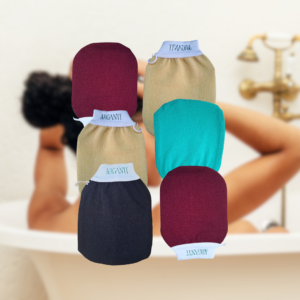
Traditional Moroccan kessa gloves are woven from coarse fibers such as viscose, rayon or natural silk-like textures. What each material feels like and how to... Continue reading