
No products in the cart.
Return To Shop
What Are Moroccan Teapots Made Of? Brass, Silver Plate and Stainless Steel
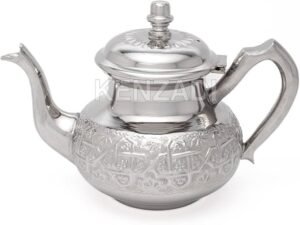
Traditional Moroccan teapots, called berrad, are made of metal: usually brass or nickel silver (an alloy of copper, nickel and zinc, also called maillechort), and are often silver-plated. Modern, cheaper versions are also made of stainless steel or aluminum. The handmade pieces from Fes are shaped, engraved and finished by craftsmen; mass-produced versions are pressed by machine. Here is how the materials compare.
Key facts
- Traditional: brass or nickel silver, often silver-plated, handmade in cities such as Fes.
- Modern: stainless steel (durable, dishwasher-friendly on some models) or aluminum (light and cheap).
- Shape: round body, long curved spout for pouring from a height, domed lid with a finial.
- Heat: metal teapots, including brass, can be heated directly on a gas stove at low to medium heat.
Brass and nickel silver
Brass (copper and zinc) and nickel silver are the classic materials. They are worked by hand: the body is shaped, the spout and handle are attached, and the surface is engraved or hammered. Many are then silver-plated, which gives the bright silver look associated with Moroccan tea service. Over time the plating can darken; see how to care for Moroccan brass.
For a detailed comparison of finishes, read silver-plated vs traditional brass Moroccan teapots.
Stainless steel
Stainless steel teapots in the Moroccan shape are widely sold online. They resist tarnish, need little care and some work on induction cooktops. They are usually machine-made and lighter in weight, without hand engraving.
Aluminum
Aluminum teapots are the cheapest and lightest. They heat quickly but dent easily and do not have the weight or finish of handmade brass.
How to tell a handmade brass teapot
- Weight: handmade brass feels noticeably heavier than aluminum or thin steel.
- Engraving: hand-chased patterns have small irregularities; pressed patterns are perfectly uniform.
- Joins: look at where the spout and handle meet the body; handmade pieces show careful hand soldering.
- Magnet test: brass and nickel silver are not magnetic; many stainless steels are.
More tips in handmade in Fes vs mass-produced brass.
Which material should you choose?
- For authenticity, gifting and display: handmade silver-plated brass.
- For an induction stove: stainless steel, or a brass teapot used with an induction adapter disc. See Moroccan teapots on induction.
- For the lowest price: aluminum.
Handmade teapots from Fes
Artossi’s teapots are silver-plated brass, made by hand in Fes and available as custom orders, shipped to customers across the United States.
Frequently asked questions
Are Moroccan teapots real silver?
Usually not solid silver. Most are brass or nickel silver with a silver plating.
Are Moroccan teapots safe to drink from?
Traditional teapots have been used for generations. Clean them well before first use, never leave tea standing in them for long periods, and replace a teapot if the inside is badly worn or corroded.
Can a Moroccan teapot go in the dishwasher?
Brass and silver-plated teapots should be washed by hand. Some stainless steel models are dishwasher-safe; check the maker’s instructions.
Why are Moroccan teapots so heavy?
Handmade brass and nickel silver are dense metals, and handmade pieces use thicker sheet than machine-pressed ones.


Related posts
Metal Moroccan teapots get hot all over, handle included. How to hold and pour safely with a cloth, a handle cover or a teapot holder. Continue reading
Moroccan teapot prices range widely. The factors that drive the price, from material and handwork to size and plating, and how to judge value. Continue reading
Brass and silver-plated Moroccan teapots will not heat on induction on their own. How to use one with an induction adapter disc, or which teapots... Continue reading

Introduction to Artossi Artossi is a distinguished importer and distributor of Kenzadi tea pots, serving the markets of the United States, Canada, and the MENA... Continue reading